Peak Power: Faces, Tools, and a Working Day
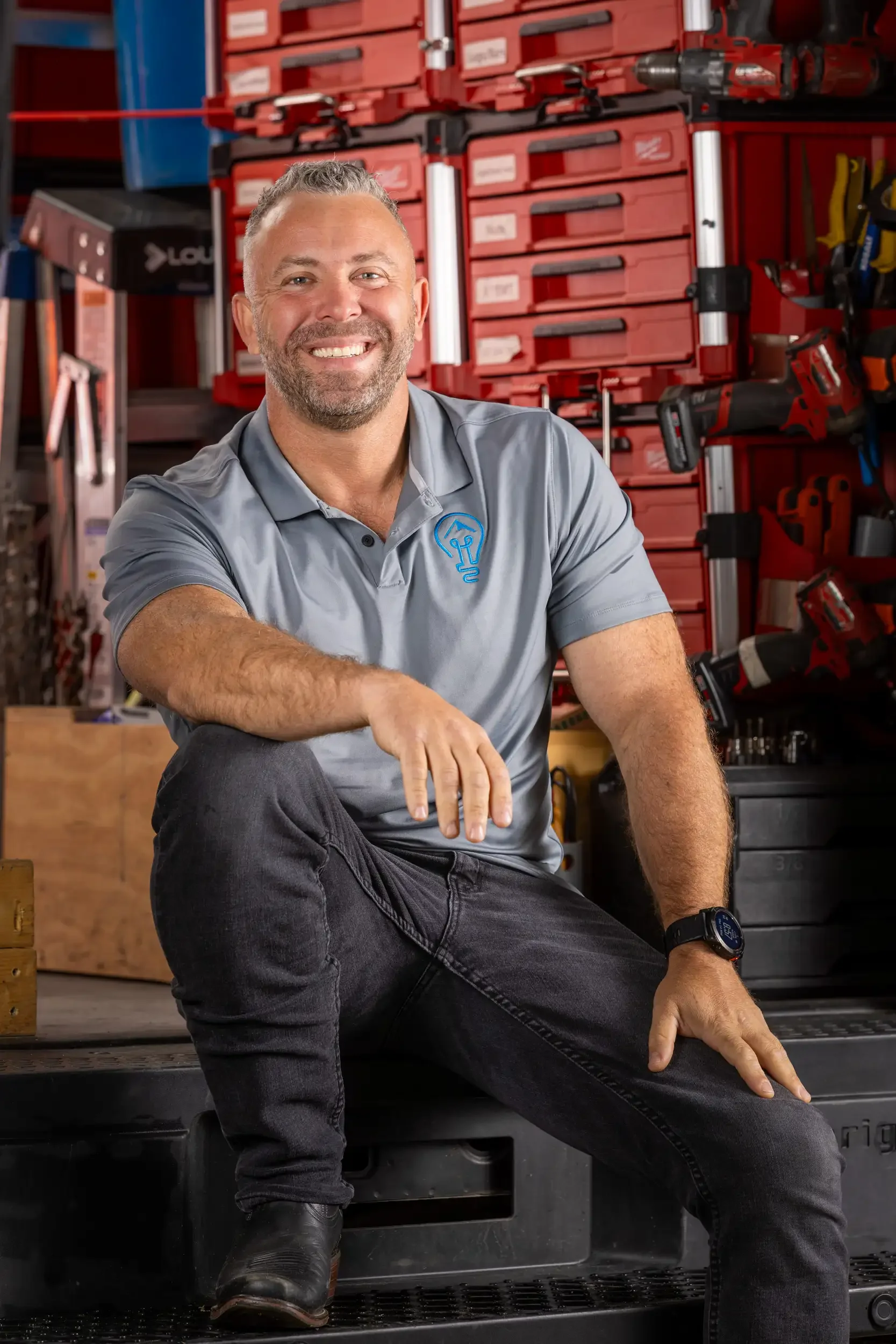
A work van full of red tool cases is a pretty good place to start a portrait.
In this set of photographs from Peak Power, the surroundings do some of the introducing. There are tools within reach, equipment packed into the van, and people who look at home among it all. The portraits belong to a particular business and to the people doing the work.
That connection is what I enjoy about photographing people in their own environment. A face gives you someone to meet. The setting gives you somewhere to begin the conversation.
The person comes first
In the seated portrait, the first thing I notice is the expression. The red cases give the photograph energy and a sense of place, but the person still holds your attention.
That balance matters. A workplace can be visually busy. When making an environmental portrait, I look for a composition where the surroundings contribute without overwhelming the face. The useful details stay in the frame; the person remains the reason for the photograph.
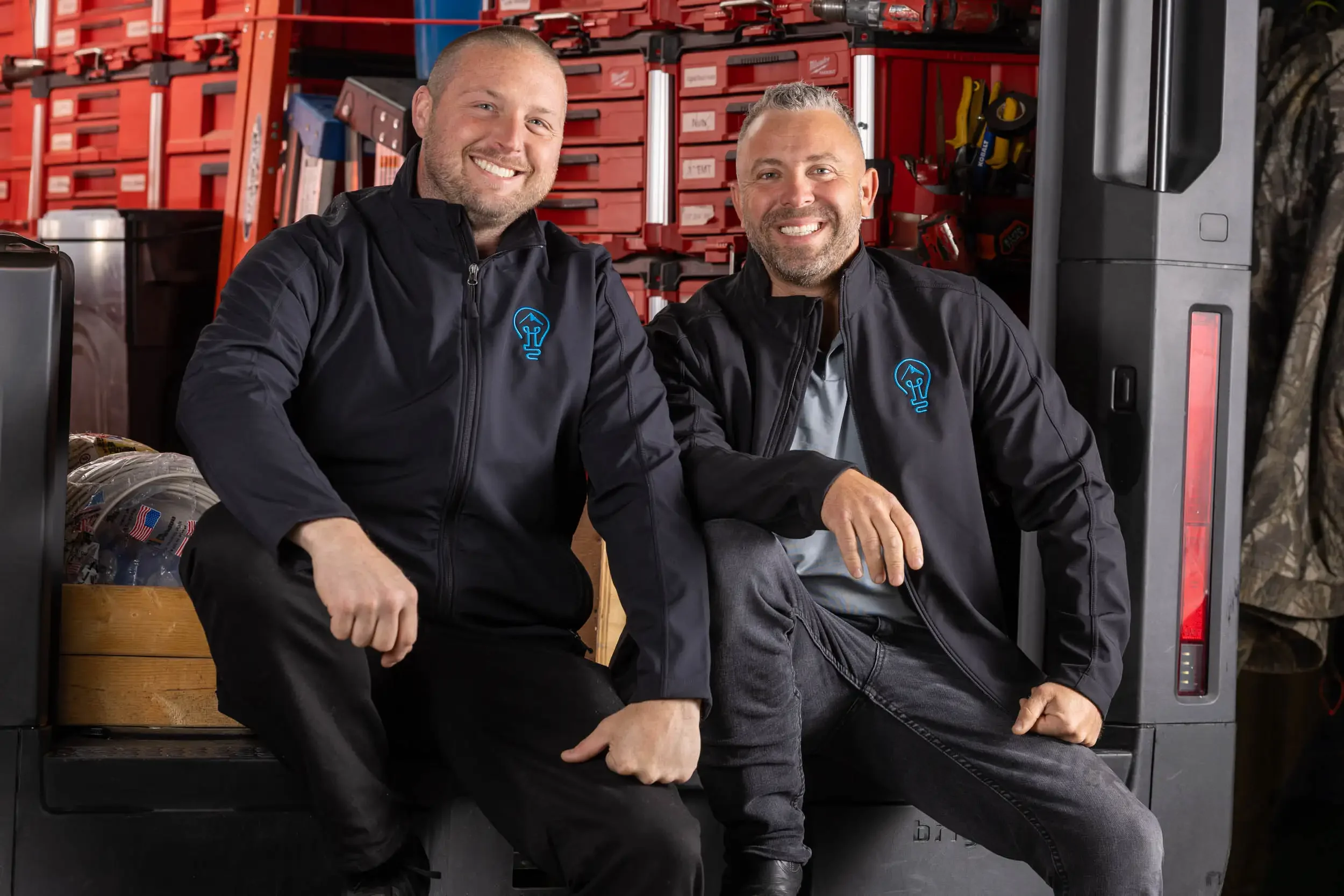
There is room for different kinds of presence within a set, too. An individual portrait gives someone their own space. A photograph of two colleagues smiling together brings another part of the team into view. I like a collection that has room for both.
Step back, then look closer
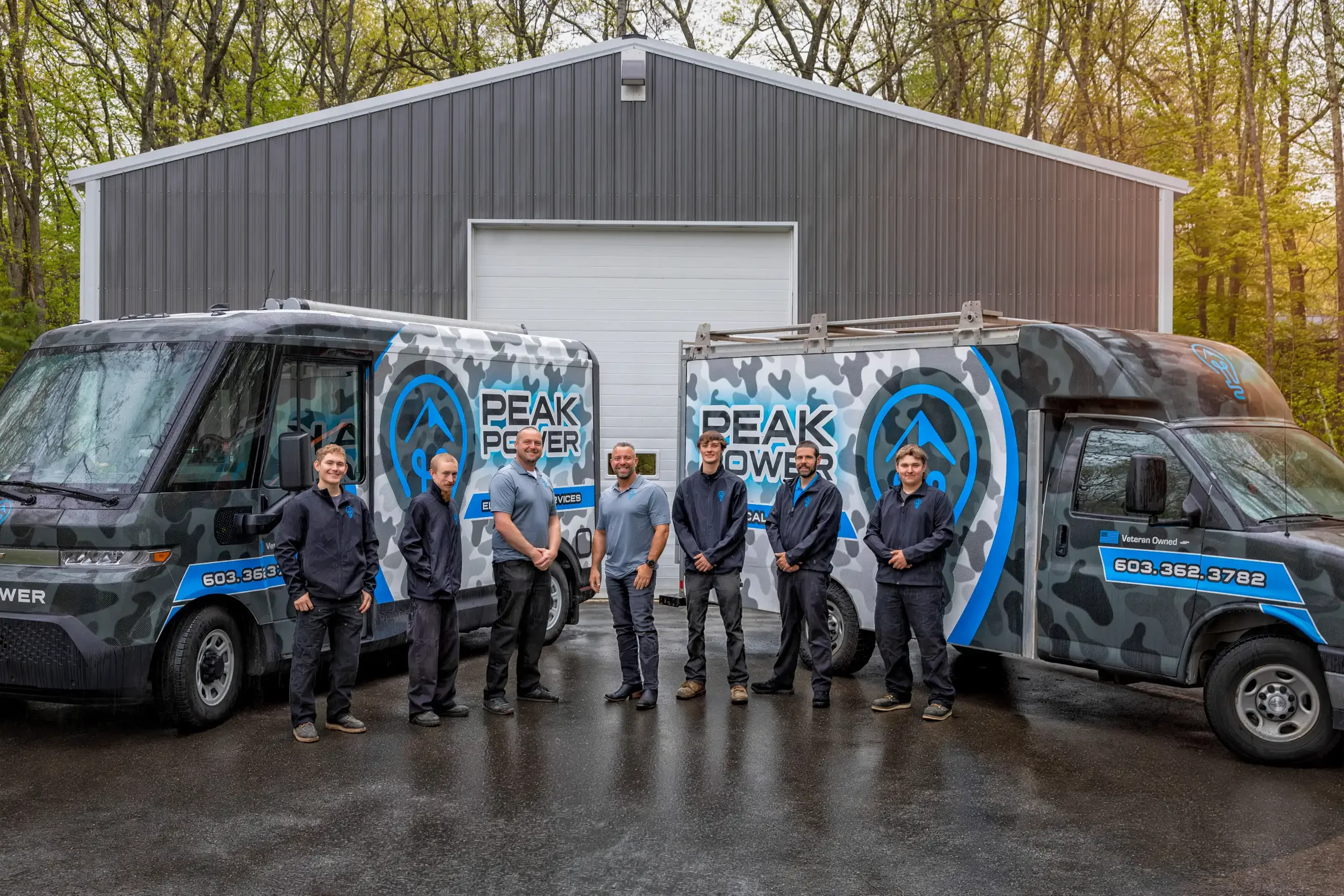
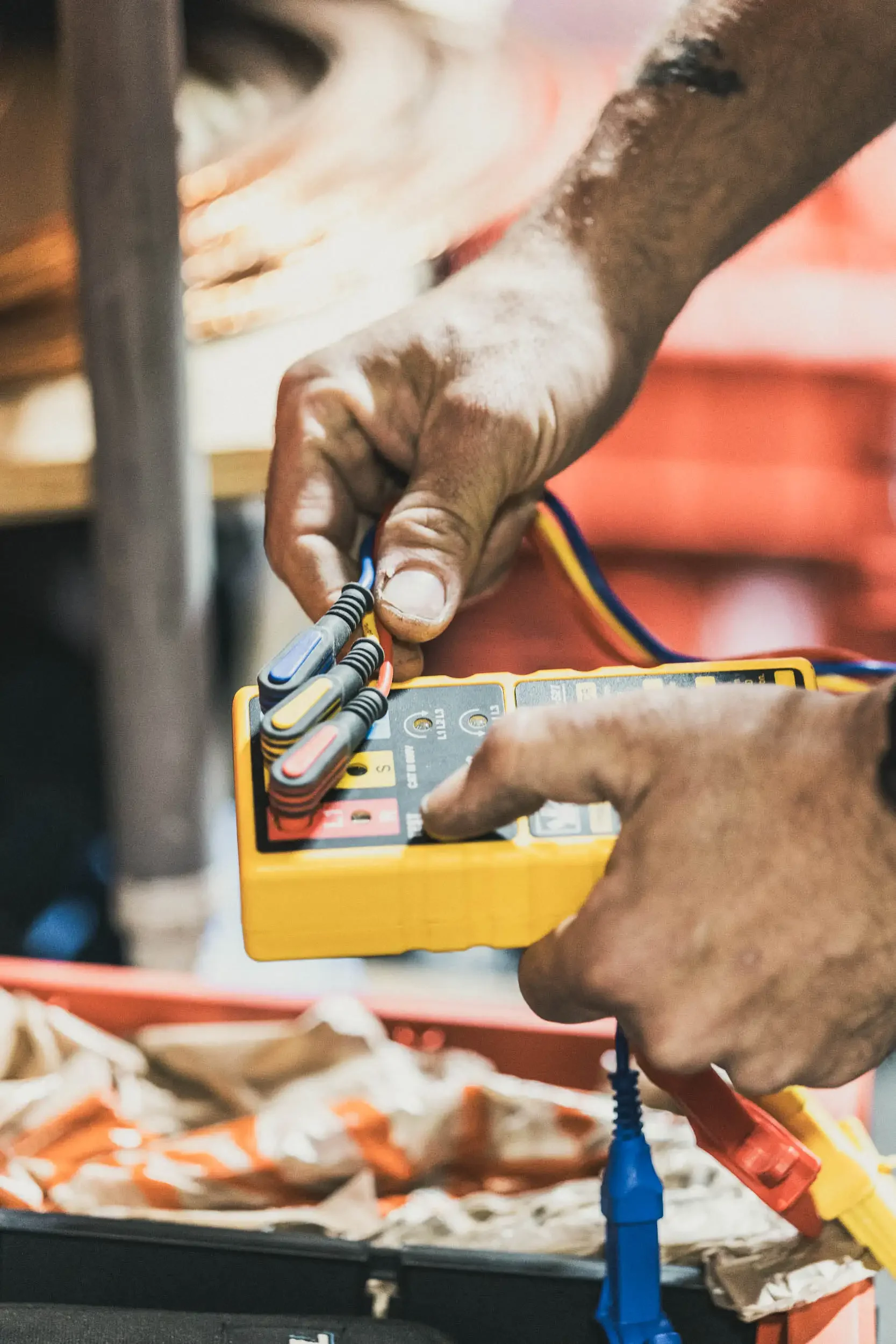
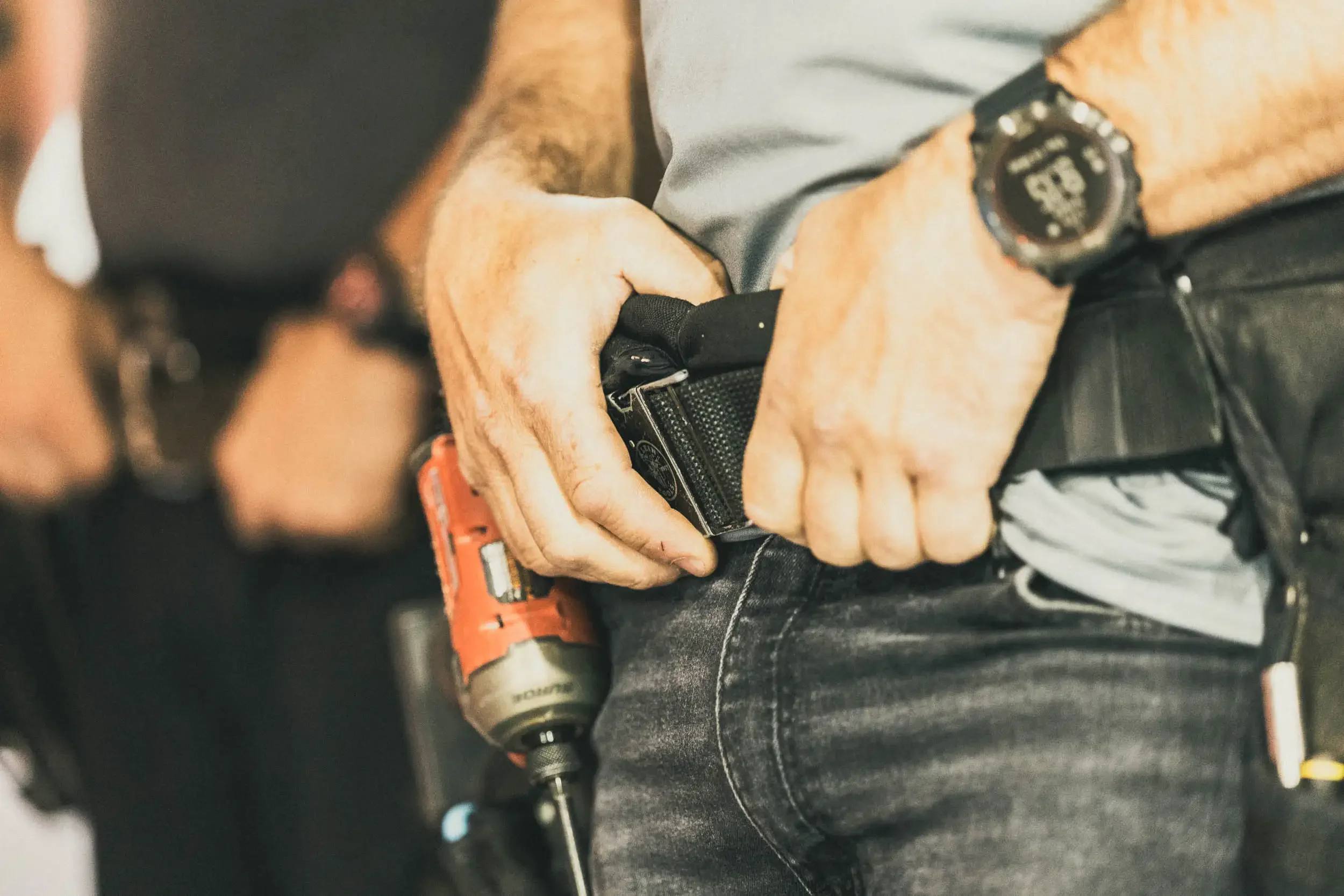
A wider photograph brings the team together outside, with their vans and the building behind them. Move closer and the story changes: hands holding a testing instrument, hands resting on a tool belt, tools arranged within reach.
These details are worth photographing in their own right. They make the work tangible. They also change the pace of a sequence, giving the eye somewhere to pause between portraits.
In this collection, the red cases carry through several frames. The closer views of hands and tools change the pace. Choosing the photographs and deciding what sits beside what is part of telling the story.
A collection with several uses
When a business needs new photographs, the first request is often a headshot or a team picture. It helps to think about the surrounding uses at the same time.
A clear individual portrait can introduce a team member on a website. A wider view can help explain the working environment. A detail photograph can accompany a story about a service or a process. Planning for those uses before the shoot helps us make the right variations.
The point is to make a connected set with enough variety to be useful. For a smaller assignment, that might mean a few carefully chosen supporting frames alongside the portraits. It does not need to become an enormous production.
Start with what is already there
If you are thinking about photographs for your own team, look around the place where the work happens. Which tools, materials or spaces would someone recognize as yours? What would a visitor understand after spending a few minutes there?
Those observations give us a practical starting point. We can then plan around the people involved, their working day and the places the photographs need to appear.
I photograph business portraits and teams in Portsmouth, across Greater Boston and throughout New England. If you would like photographs that show more of the people behind your business, tell me what you are working on.