The Foreside Inn, and the Choice to Look Closer
I like Maine. Hell, I love it. It’s "the way life should be"—just like New Hampshire, without the whole "or die" part. But it’s easy to think of Maine as just rustic, cute, and cold. It is that. But not all the time. When you actually stop and look at what people are building here—I mean really building, like the new Foreside Inn right across the river in Kittery—you realize that Maine can also be modern, chic, and yes, comfortable, all at the same time.
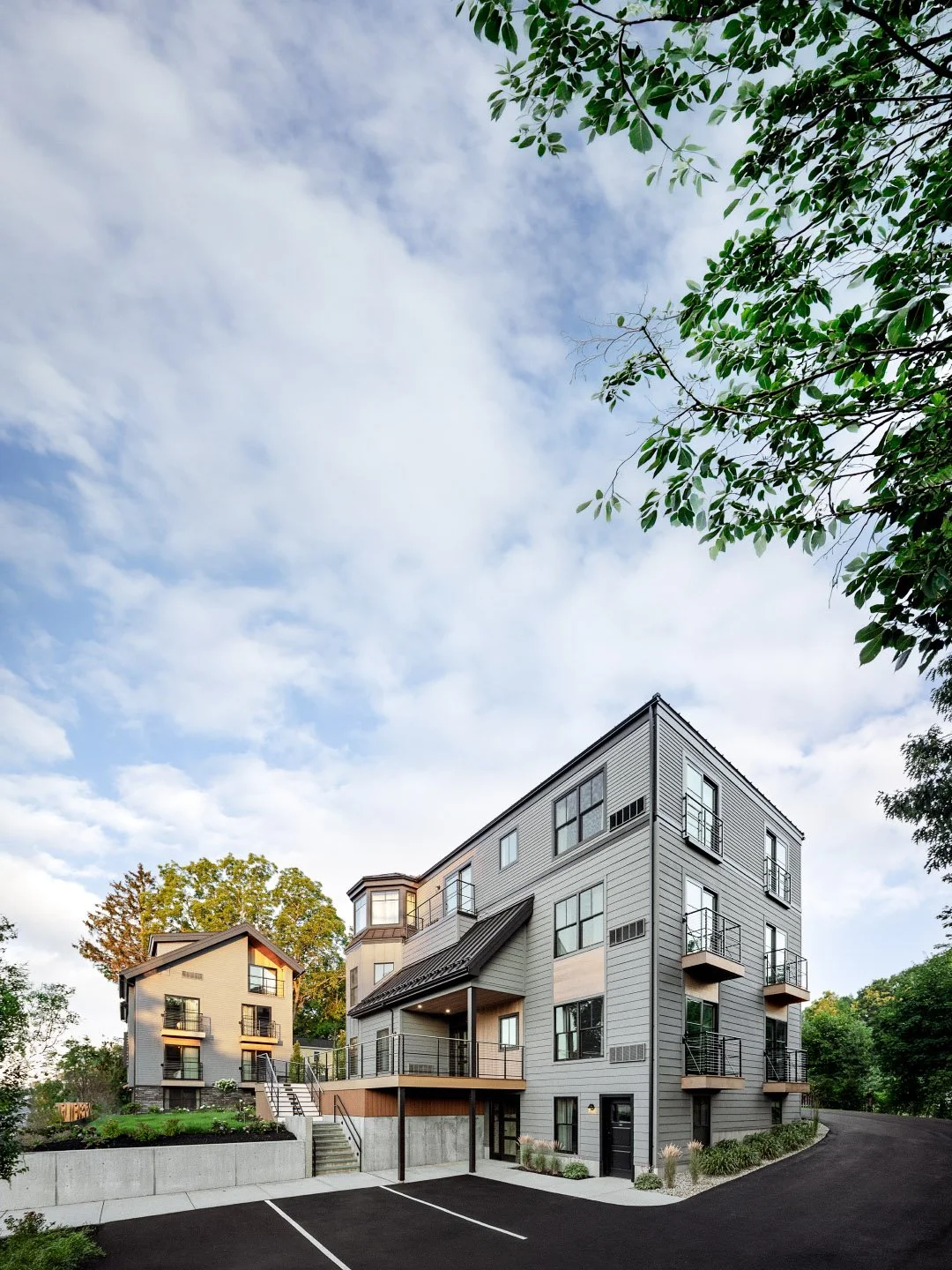
This actually all started with a magazine shoot for Winter Holben Design many months ago. The shoot went great—made the cover!—and I even got a callback from Elisa to shoot their new offices in Kittery. While I was there, she mentioned they had designed a brand-new hotel just around the corner at 3 Walker Road. I drove past it after that shoot and, lo and behold, there it was. But it was all raw framing and drywall, with pipes and dangling wires everywhere. So I basically had no idea what it would actually look like when finished, but I told her I loved the vision and to keep me in mind.
Fast-forward a few months and I get a call from Taylor asking if I can shoot it. He says he needs a few shots of six room types—let's call it 18 shots total—plus a handful of exteriors (say, three). There’s no lobby or restaurant, no gym or conference room, no pool or snack bar. So the shot list is pretty tight. Which is a good thing, because he needs it all done in two weeks before they open! And to make matters more pressing, I’m flying out to Barbados for a week with my family just days before his hard deadline. So if this is gonna happen, we’re gonna have to hustle.
First step: the scout. I went over the next day to take a look around the still-in-progress, but getting close, hotel. There were mattresses, but no linens, and lots of missing furniture and fixtures. But the bones were looking good, so we scheduled the main shoot a week out to let everything come together, giving me just one week on the back end to process. Fortunately, the outside was looking pretty done. I started shooting those exteriors the next day so I could get a jump on post-production. And thanks to a little helpful hand from AI to get rid of some unfinished construction site clutter and a flurry of background power lines, those hero shots came out great.
But then we hit a new problem. The scout revealed we needed to add a couple more rooms, plus extra shots for each room. The count kept growing.
We went back and forth over the weekend seeing if we could consolidate shots or repurpose angles from different rooms. But the unique character and layout of the hotel gives each room type a very distinct, individual feel. And the clever use of design between the two buildings ensures the property never feels cookie-cutter or redundant. The only real option: add another shoot day. Great for my business, but terrible for my schedule! I now had two full days of shooting to process in just a few days with a hard out on JetBlue early Saturday morning.
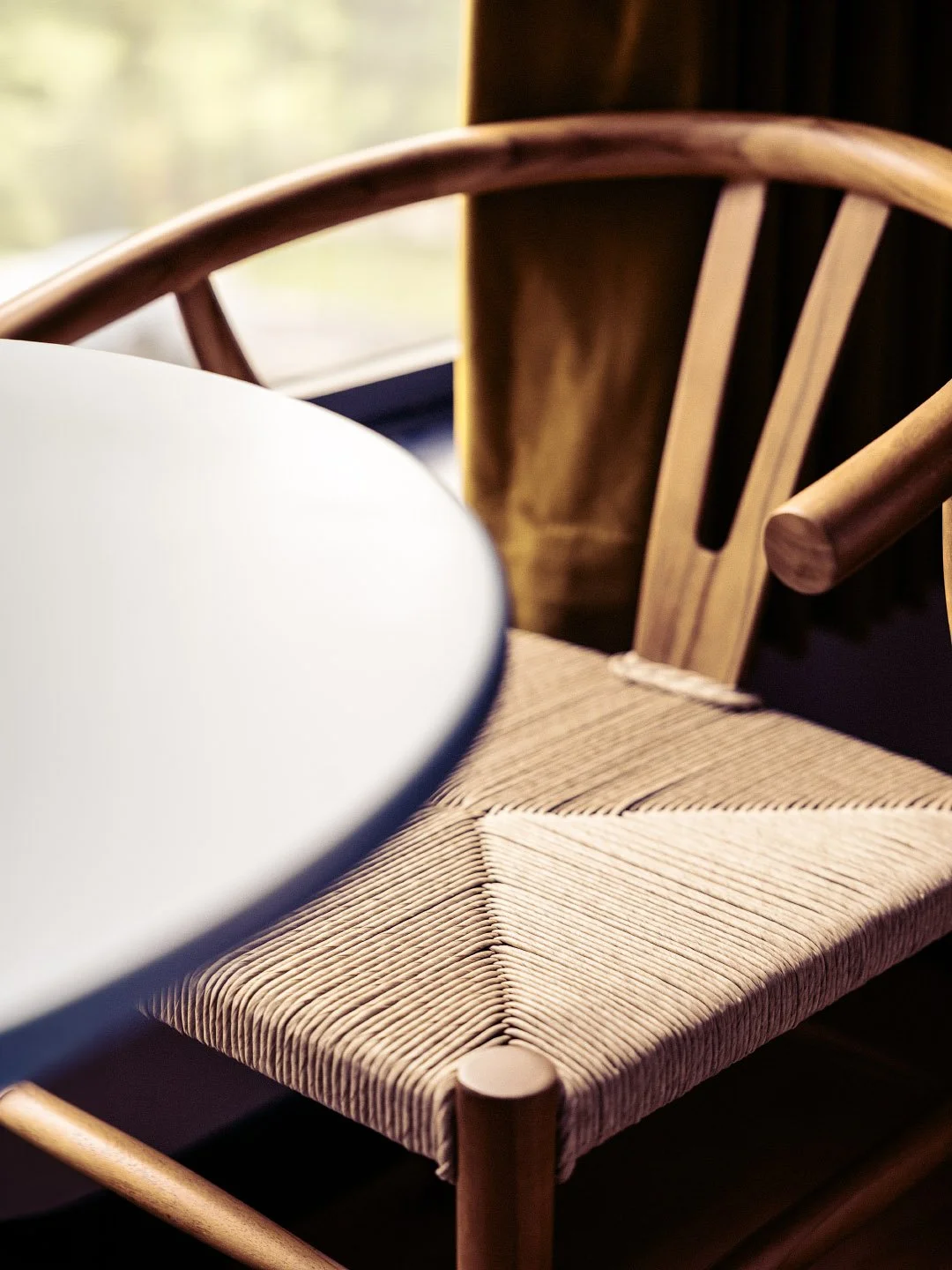
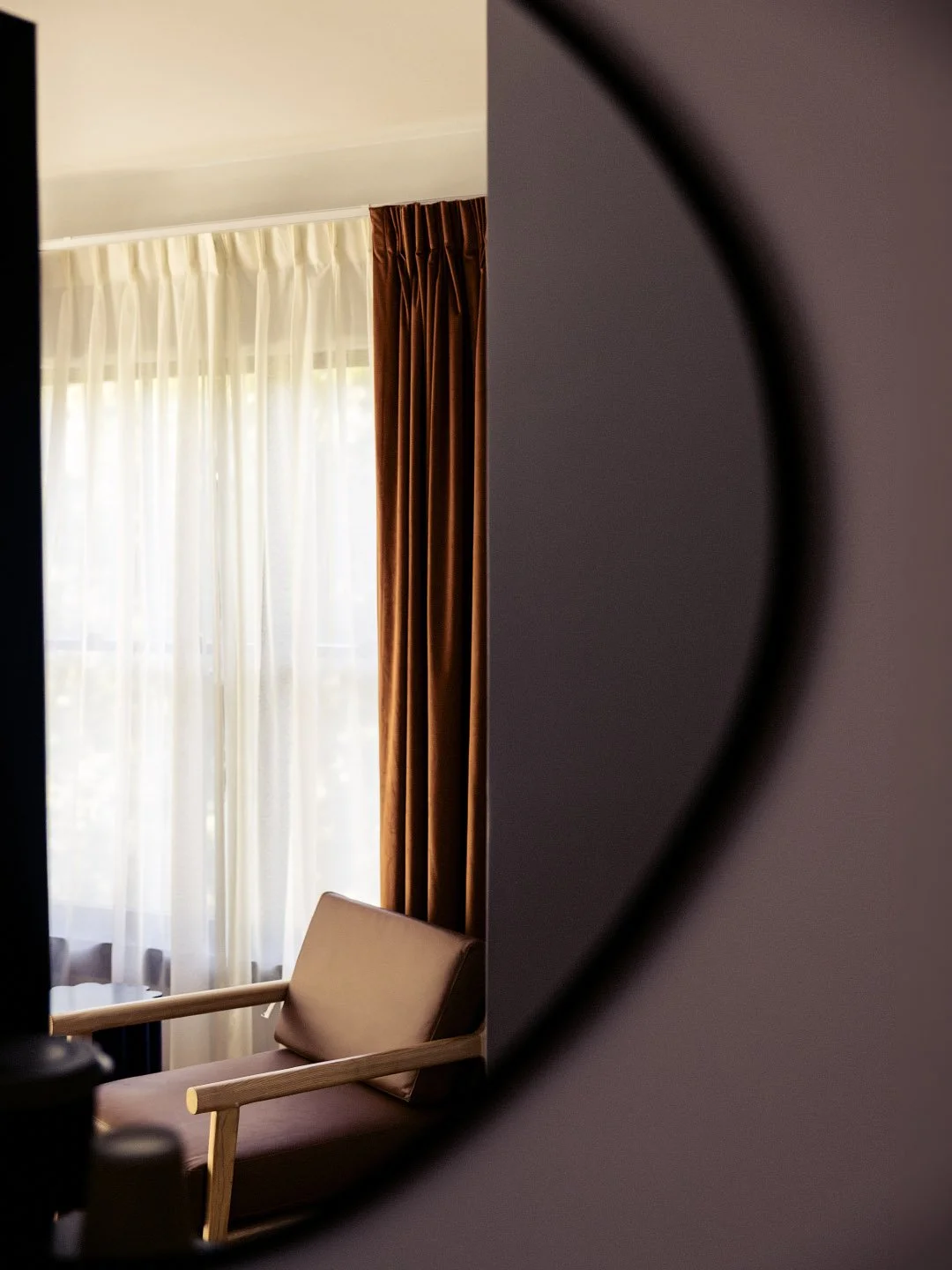
But enough about me. Let’s talk about the buildings and how I shot them. Because a picture is taken, but a photograph is made, and the difference lives entirely in choice. It’s standing in a doorway looking at deep navy walls, punchy terracotta curtains, retro black Frigidaires, and custom wallpaper printed with silhouettes of Portsmouth naval cranes and lift bridges, and deciding what this room is actually trying to say. You don't just accept the light in a space with vaulted ceilings and geometric tile; you negotiate with it. You set your tilt-shift lens, line up your verticals so the walls don't fall backward like a funhouse mirror, and make a deliberate argument with the frame rather than just recording a square box where people drop their suitcases.
When you spend years doing commercial photography, you learn real fast that it doesn't matter if you're in love with your own artistic eye—it matters whether the image works. Whether it’s clear, immediate, and does the job it was hired to do for the business.
The shoot went great. My feet were dying from the three flights of stairs in each building, but the rooms looked perfect. Once the required shots were bagged—the precise room angles, the crisp bathroom details, the exterior sign bathed in early morning light—I spent a few extra minutes chasing the stuff nobody put on the shot list: the hard diagonal shadows crawling across the wood floor from a high window, the silhouette of a modern brass chandelier against an angled ceiling, the quick interplay of light and dark that happens for five minutes before the sun moves on.
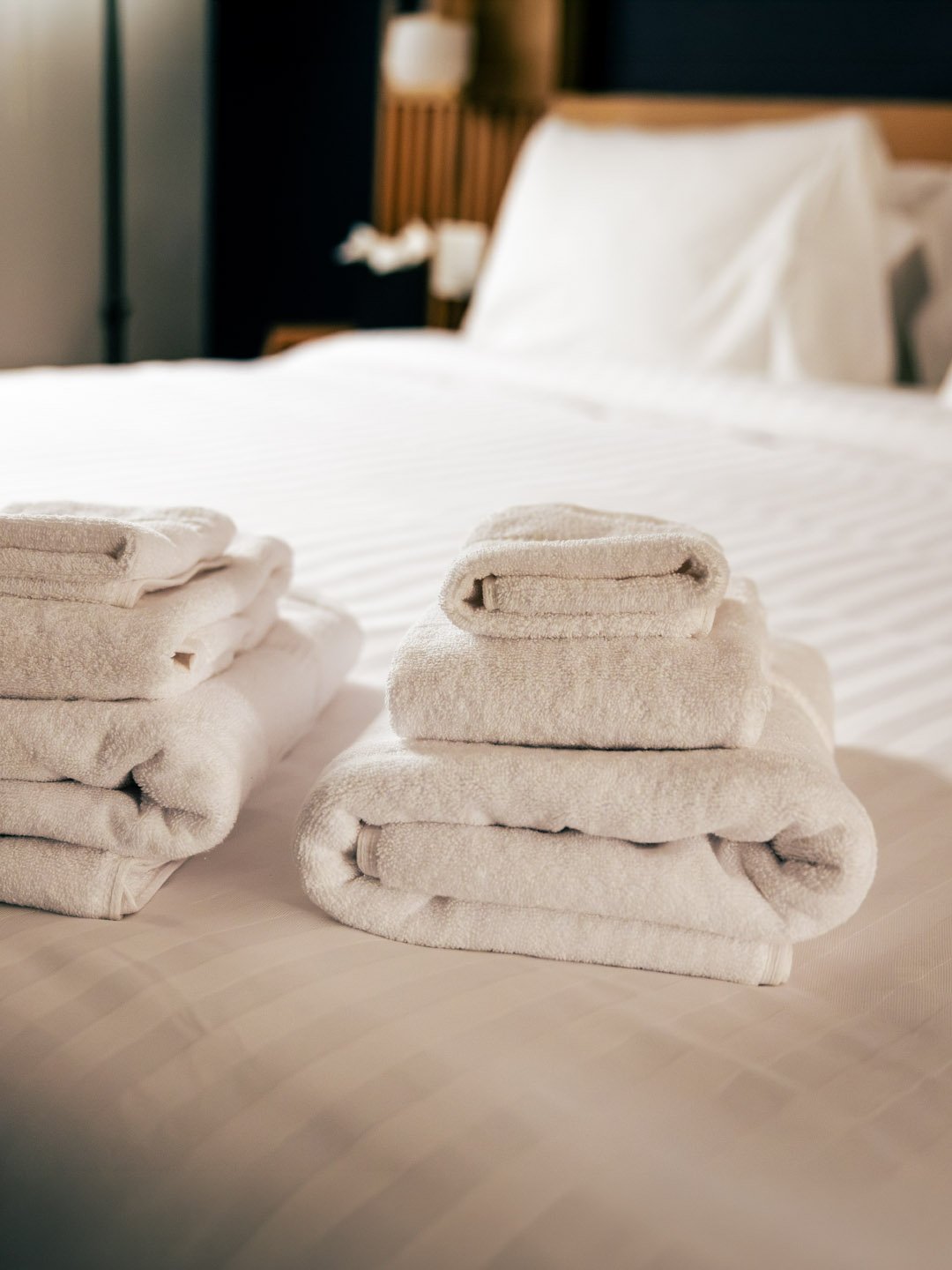
Now the real fun began. Hours all day and late into the night hand-blending each room, with a little extra help from AI for some wrinkly bed covers that the hotel hadn’t had a chance to steam yet. But looking sharp in the end. When it was all said and done, 35 photos—expertly finished and exported for easy asset management—were delivered not only on time, but a full day early in case there were any revisions needed. I even cropped a batch for Instagram.
No drama. No three-week production circus. Just clean, deliberate images of a modern New England space built by people who cared enough to make something real, captured by a guy who showed up, figured it out, didn't make it weird, and delivered something they could actually use.